Press

Excerpts from articles about my art

DOLL CRAFTER & COSTUMING
(July 2007)

Bugged is an 18-inch polymer-clay sculpt by Heidi Hooper.


DOLL CRAFTER & COSTUMING
(October 2006)

Heidi Hooper was commissioned to sculpt this vampire for a man who plays a vampire every Halloween for a fundraiser. The dolls holds a picture of the man.


DOLL CRAFTER & COSTUMING
(August 2006)

The Kiss by Heidi Hooper featires a wood fairy blowing a kiss.


DOLL CRAFTER & COSTUMING
(July 2006)

The work of Heidi Hooper, As You Wish portrays Peter Falk in his role as Grandfather in The Princess Bride. This doll, which stands about 18 inches high, is a one-of-a-kind polymer-clay sculpt. Heidi also made the costume.


DOLL CRAFTER & COSTUMING
(June 2006)

Crown and Feather is Heidi Hooper's depiction of a couple in wedding attire at the New York Renaissance Faire. the polymer-clay figures are approximately 18 inches tall.


POCONO RECORD
(April 2, 2006)
"Stroudsburg artist aims for unusual, using dryer lint"

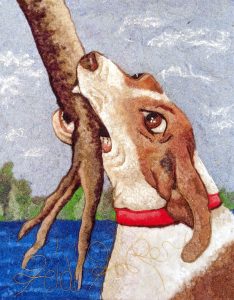
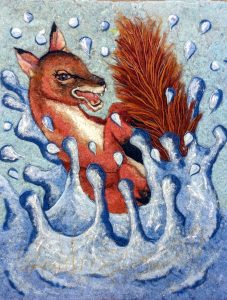
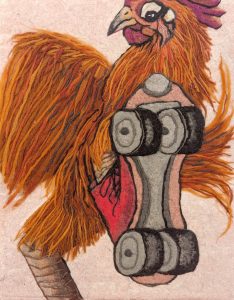
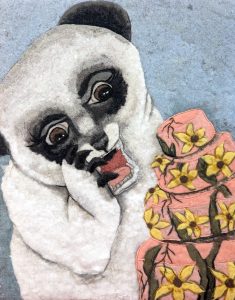
Stroudsburg artist Heidi Hooper, who makes photographic-like artwork using dryer lint, as well as sculpted dolls, sells most of her work in urban areas — such as Boston and New York, where art has to be different to find a buyer.

However, DM Studios in Marshalls Creek, operated by Donna McCartney and Jasmine Abrams, will change all that.

This new gallery is receptive to all sorts of art and will feature the work of Hooper as well as many established artists and fledgling younger artists trying to make a name for themselves.

"Jasmine has always been very honest and straight-forward in her interest in artwork that is not in the traditional norm," Hooper said. "A lot of artwork here in the Poconos tends to be the same because you are selling to tourists, who are looking for the traditional. In the big-city galleries, they are looking for something different."

Hooper also noted that people on vacation are more likely to spend $20 on an item than write a check for a pricier piece of art. This is another reason that artists cater to the tourist art trade to make their bread and butter, and this usually translates to traditional artforms, such as landscapes and florals.

"I've never been the one for the traditional," said Hooper, who was a metalwork artist prior to a bout of cancer that limited the use of her right arm.

In the new gallery, visitors will be treated to many types of artwork as well as the owners' murals and faux finishing services, and the custom framing work.

"I think they will look for more than what is going to sell, look for something different, unusual and cause people to go in and look to admire art," Hooper said.

When Hooper's illness limited what she could do as an artist, she tried painting, but quickly remembered how much the fumes bothered her.

Her mother-in-law's laundry habits actually heated up an artistic idea for Hooper.

Her mother-in-law came to stay with Hooper to help out. Friends had given Hooper colorful chenille throws to add cheer to the day. But Hooper's mother-in-law washed and dried the throws to the point that they disintegrated into dryer lint.

"I had these really nice primary colors in lint. I was cherishing the throws because it was such a nice thing for people to do for me, so I kept the lint in boxes," Hooper said.

As the lint collection grew, Hooper decided to try working with the fluff to create abstracts and then human figures. Eventually, she settled on taking photographs, projecting the image on a board, tracing it and then coloring with lint by using tweezers to apply the lint.

The whole piece is held in place by the frame and glass, which means many projects blew away before she was able to finish the artwork.

Hooper told others that she would make a work of art if they would send her lint. Many sent lint and didn't ask for anything in return. She now has 120 boxes of lint that are color-coded.

"I've got so many boxes of dryer lint that I can almost get painter's shading," Hooper said.

The toughest color to find is orange.

"People just seem to like it," said Hooper, who is represented by A Mano Gallery in New Hope.

She knows of only two other artists working in this medium, mainly creating landscapes. "I think I'm the only one doing it at this scale," Hooper said.

Many people commission portraits of their pets. One person gave her the lint from her dryer that included the pet's fur that had shed onto the clothing.

"My view is to expose people to different kinds of stuff," she said.

Her dolls, created from ProSculpt clay, are reflective of the people she meets. She sees an interesting face and asks the person if she can take their photograph.

"These are basically portraits of real people," Hooper said.

With a clay face finished, she will create an appropriate costume.

She sells many dolls at the annual Renaissance Fair in Tuxedo, N.Y., during the late summer. Several of the dolls are in period fashions, which sell well.

Hooper said, "I try to make it as realistic as possible so that it seems that it is going to get up and walk towards you."


CONTEMPORARY DOLL COLLECTOR
(September 2005)
"Gallery"

Heidi Hooper's Dancing Elf is celebrating! He is 20 inches tall and sculpted of ProSculpt. His clothes are handmade silk.


POCONO RECORD
(January 11, 2005)
"Unique chairs will raise money for arts council"

"Seating for Ten," a fund-raising event that benefits the Monroe County Arts Council, features 10 child-sized wooden chairs decorated by 10 local artists.

The chairs are on display at two locations: the arts council offices, 18 N. Seventh St., Stroudsburg and the lobby of the Pocono Record, 511 Lenox St., Stroudsburg during regular working hours.

A silent auction will be held during the Stroudsmoor Country Inn's Second Annual Fine Arts Exhibition to be held from Friday, Jan. 21, through Sunday, Jan. 23. The winning bids will be announced at 5 p.m. Sunday, Jan. 23.

Artists were encouraged to use whatever medium that they had available to color, alter, add to and/or subtract from, the blank "canvas" to come up with a one-of-a-kind funky piece of art.

Artists included: Nancy Bohm, Rebecca Butler and Ty Yost, Rod Cameron, Brandin Durand, Joan Groff and Barrett Elementary Center's fifth- and sixth-grade students, Heidi Hooper, Carol Kindt, Lois Kirkwood, Karen de Balbien Verster and Suzanne Werfelman.

A.C. Moore in Stroud Township donated the chairs for this project.

The bids will begin at $50. Those unable to attend the exhibition can leave a bid with the arts council. Funds will be used for the council's general operating expenses.

Also, the chairs will be judged, and a prize will be awarded for the "Best Seat in the House." (Heidi's chair is the second one from the front in the picture)


CONTEMPORARY DOLL COLLECTOR
(November 2004)
"Cinderella"

Matilda, by Heidi Hooper, is a marionette, 20 inches tall, Prosculpt, one-of-a-kind.


POCONO RECORD
(April 30, 2004)
"More than just a pretty face"

Strolling musicians, fine crafts and works of art, like this sculpture by Heidi Hooper, will enhance an Evening on Main, Stroudsburg.


POCONO RECORD
(April 27, 2004)
"Walking stiff"

Heidi Hooper of Stroudsburg was quite a sight carrying her sculpture down Seventh Street to the Monroe County Arts Council Monday afternoon in Stroudsburg. Rachel Cohen, a MCAC volunteer, helped Hooper tote her creation, which she calls Ralph. It is made from, among other things, steel, bubble pack, paper clay and clothes. Artists swarmed MCAC Monday to drop off their work for Evening on Main, which happens this Saturday.
(Click here to see this piece, which won "Best Sculpture" at the competition.)


POSTSCRIPT
(January 5, 2001)
"Winter Blues"

The thing about a theme show such as Winter Blues is that it is a challenging, fun thing..Heidi Hooper has been showing her sculptures in bronze and polymer clay since 1975. Her entry is "Cat Blue" with cats climbing around on branches. She studied sculpting in college.


POCONO RECORD
(September 24, 2000)
"New Creation"

Only ones with a heart of steel will make it. Heidi Hooper, a sculptor and metalsmith, should know. She studied art and has degrees from Virginia Commonwealth University and Massachusetts College of Art.

As a child growing up in Virginia, she was sent to art classes where every instructor asked participants to do the same thing for every class. Drawing trees was one of the favored exercises.

"I don't want any kids to go through that. It almost soured me on the arts. If I didn't have that little monster inside me wanting to create, it would have," Hooper said.


THE BOSTON PHOENIX
(May 24, 1991)
"This Weekend"

"Pretty" is not how local metalsmith Heidi Hooper would like people to describe her weird bronze creatures, suits of armor, and sculptured bones, all of which are meant to get the censorship squad's blood pressure up. Her works are included in a show called "Off Color" at MassArt's Huntington Gallery.


THE ENCYLCOPEDIA OF AMERICAN ARTISTS
(1989 edition)
"Heidi Hooper"

BFA in Sculpture and jewelry from Virginia Commonwealth University. Presently showing in Boston galleries including Goldsmith Copley Place. Works are primarily in silver with precious stones. Each piece is designed with "my hand firmly on the torch and my tongue firmly in my cheek." Works include pins, pendants, and boxes, each one individually designed.


PRELUDE MAGAZINE
(May 1987)
"Heidi Hooper: Silvered Smiles"

At age 28, silversmith Heidi Hooper is still watching cartoons and playing Dungeons and Dragons. And when she misses the cartoons on Saturday morning, friends tape them. Along one wall stands a bookcase full of tapes -- which also includes oldies of the Marx Brothers, or Betty Boop, Popeye and Fleischer cartoons -- are in jackets rainbow colored by magic markers. Looking around Hooper's third floor Boston Apartment -- noticing a metal tray with youthful faces of the Beatles -- it becomes easier to understand the source of her unusual art.

Hooper, with the playful imagination of an animator and the artistic training of a sculptor, is quickly becoming known for her whimsically humorous silver pins. The pins, which measure about two inches square, depict tiny scenes played out on a sterling silver stage.

"I try to make a portable sculpture -- a piece of art within a piece of art, rather than something that is just there to look at," says Hooper. "Most jewelry is just there to reflect something about the person wearing it, but I try to evoke something beyond 'Don't I look great in this!'"

One of Hooper's favorite pieces is a pin called "Pork Roast." In it, several tiny pigs stand atop a roasting pan, giving speeches from a podium. Often her characters are a mix of human and animal. The scenes capture a single, suspended moment of ironic activity: a cow stakes a furnace with a coke bottle; Fred Astaire dances with a turtle; a pig dances in a chain mail tutu; a man eats dinner with a rabbit; a crab tutors another crab. They are often very funny.

"I like things that seem normal but are not really normal at all," says Hooper, who uses pigs, frogs and turtles most often in her work. "Anything that is tongue-in-cheek, I love."

Hooper, who also makes silver earrings and silver boxes, produces about 50 pins a year, which are sold at the Goldsmith in Boston and in galleries in the south and west. The pins sell for $200 to $350, earrings sell for $12 to $30, and the boxes sell for $500 to $1000.

Raised in Richmond, Virginia, Hooper studied at Virginia Commonwealth University art school, majoring in sculpture. In school, Hooper first worked with matress stuffing to create larger-than-life human figures, a far cry from her current miniature silver pieces.

"During one semester at school," says Hooper, "my work shrank from six feet to six inches."

Toward the end of her schooling, Hooper began making decorative silver boxes. She decided three years ago to make wearable pieces. This decision led first to a series of pendants, and then to pins. The first pins, she says, were designed at puppet-show stages and were less imaginative than her current work.

In developing scenes for the pins -- which are one-of-a-kind -- Hooper began to draw on her fascination with cartoons and the human qualities given in them to animals.

"I always find -- and maybe it's because I am a vegetarian -- that animals are very human," says Hooper. She explains in a playful voice that in our strictly realistic way of looking at animals we impose unimaginative limits. "'You're a goat. You can't do that,'" she mimics. "But if tis wasn't real-life a goat probably could do that -- whatever that is -- if it had enough brains."

It is that one step beyond "real-life" that makes Hooper's scenes so unique -- like a pig riding a bicycle. The second step is the actual moment she captures on the pin: a single, frozen moment, like one frame in an animator's strip: a lady kicks up her feet as she dances with a centaur.

"I'm trying to make a freeze-frame that you wear," explains Hooper. "That's why they're on a stage -- it's as if they are part of a play. And I try to incorporate some sort of movement so that it looks like they're moving, even though they're not."

Hooper works in a small kitchen pantry which serves as her studio, but only some of the work is done there. In the studio she carves the elements of the imagined scene from wax. She then takes the wax pieces, attaches sprews, or small holding sticks, and places them into a cylinder filled with plaster. The cylinder then fits into a centrifuge at a friend's Boston studio. In the warmed centrifuge a cast is made of the wax figures, which melt and drip out, leaving a hollow, fine plaster cast. Molten silver is then injected into the cast to form the figures for the scene. Back at her studio, Hooper arranges these figures onto a stage that she makes in advance. The figures are soldered into place, details filled in, and the piece polished.

Over the past three years, Hooper has seen her work become freer and more comical. She says she tries to draw casual observers into her pieces -- and offer them more than something merely "interesting." She wants to see them smile and enjoy the humor of the captured moment.

Hooper wants the audience to respond as if they were observing a live performance. She recalls the words of one of her professors who warned against the dangers of a metal, such as silver, which is naturally beautiful: "If you're dealing with a pretty metal, then you have to work the hardest -- you have to fight the 'pretty' to make it interesting. There has to be something to make you think about the piece after you've left it. Otherwise, you're just making pretty objects."

With this warning in mind, Hooper has set out to create engaging jewelry. having mastered the pin, she soon hopes to transfer the narrative scenes to earring sets and necklaces. For one future project, she plans to make a Romeo and Juliet jewelry set -- earrings, necklace, and pin -- of a rabbit and a goat at various stages of their wooing, romance, and late-life marriage.

But for all her efforts to make engaging art, Hooper insists she's not trying to make a statement. "I am interested in the arts because I enjoy doing it -- I have never tried to make statements," says Hooper. "Twenty years from now people will have a different opinion of the work, so why try to impress your opinion of it? Why not do it just because you enjoy doing it?"


THE CITIZEN ITEM
(April 17, 1987)
"Humor, Art Set Jewelry Apart"

A turtle dancing with Fred Astaire, a frog crooning to a voluptuous woman, and a cow stoking a furnace with a coke bottle are not the images that inspire most jewelry designers. And that's just fine with Heidi Hooper.

To Hooper, a Brighton resident, the distinctiveness of her work -- primarily silver brooches and pendants -- is its most appealing feature.

"Everybody does jewelry that looks like jewelry," she says. "But nobody does anything like mine. Twenty years from now people will look at it and say 'Hey, that's really interesting' rather than 'Oh, that was done in the '80s.'"

She quickly adds with the hearty, self-effacing laugh that often bursts forth during her conversation, "But then, I like the weird things in life."

She traces her affection for the offbeat to the influence of sculptor Joe Seipel, one of her art teachers at Virginia Commonwealth University. Her favorite Seipel creation is a tongue-in-cheek piece depicting what at first glance appears to be a fish with a hook in its mouth. Upon closer inspection, though, the viewer discovers that the fish is actually reeling in an old boot.

"His big thing was that if you're using pretty materials, you've got to make the people notice the piece first," she explains. "In most metal work, you notice the sparkle before the design."

To add to the allure of her own designs, Hooper uses miniscule three-dimensional animals in unlikely postures. A cartoon aficionado, she asserts that the comic potential of animals in her creative wellspring and drawing from it adds to the visual experience."

"I love using animals," she says. "They're really intriguing sculpturally. It's normal to see a person on a bike, but when you see a big fat pig riding one, it's different; it draws you in more."

Hooper maintains that, once the eye is caught, the imagination flourishes. As she suggests, one has the feeling that the tiny figures stopped their activity when they realized that they were being watched, and that they might suddenly resume it. At times, this fantasy actually comes true -- in one piece a rabbit's oversized head jiggles as he eats dinner with a man, and in another, a well bucket rises with a tiny crank.

Nurtured by teachers who encouraged creativity of this sort, Hooper spent years developing her style. After graduating from art school, where she majored in sculpture and jewelry making, she moved to Boston and worked at a succession of jobs -- diamond inspection, earring production, and jewelry repair. She tried with limited success to market her own line of "typical el-cheapo" earrings, but eventually decided to follow her art -- and her heart -- and began concentrating her efforts on less conventional jewelry. These efforts were hampered by a lack of retail know-how and the reluctance of gallery owners to take a chance on such unique merchandise.

"A lot of places in Boston cater to the easy sell," she contends. "If they don't know it will make them money, they are not interested. Others would say 'Well, I'm not sure...' and I would start packing up my things to leave. I thought the pieces would sell themselves; I didn't know I had to make a sales pitch."

Hooper's breakthrough finally came when the owner of the Goldsmith, a Copley Place gallery, commissioned her to make ten brooches.

"I was shocked," she recalls, punctuating the memory with a laugh. "I'm still shocked."

Even more astounding to her was the price range he suggested -- $125 to $200 wholesale and $200 to $400 retail.

"But people are buying them," she says, the disbelief evident in her voice. "They seem to think the price is reasonable."

Hooper explains that the special title she engraves on the bottom of each piece -- another expression of her whimsical humor -- has been an inadvertent boost to sales. The first piece she sold, which depicted a slightly inebriated elderly gentleman conversing with a chicken and a cow, was entitled "Uncle Bob and Friends." A customer from New Hampshire thought it would be the perfect gift for her Uncle Bob who just happened to be a farmer.

Hooper's work was recently highlighted in Prelude, a national fashion magazine, and it will soon be sold in galleries across the country. Despite the attractiveness of such notoriety and commercial success and the laborious, time-consuming process of casting the jewelry, Hooper is adamant in her determination to maintain the integrity of her art.

"These are my babies," she says, fondly examining a brooch. "They're really precious to me. I've never in four years made one that looked like another."

She continues, "I feel good about what I'm doing. I still feel like I'm producing art and not just objects. I don't think I'll ever change -- if anything, I'll just get worse!"


Home | Dolls | Lint | Polymer | Silver | Bronze | Costumes | Resume | Press | Purchasing Art